
Apple Jelly
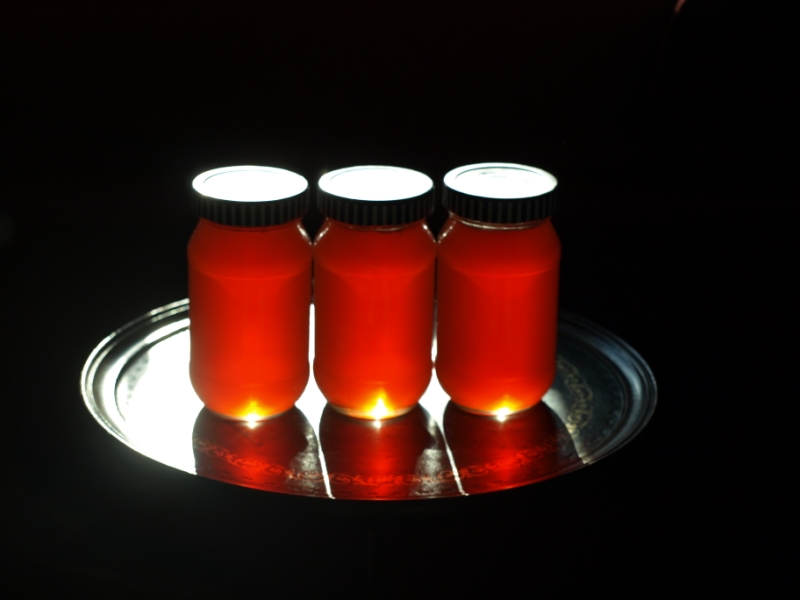
40 servings45 min prep30 min cookMedium
Sign in to rate this recipe.
The Tale of Apple Jelly
Apple jelly has been a European and early American staple since colonial times, prized because apples' natural pectin lets the juice set without added thickener. It was especially valued as a way to use tart or blemished apples unfit for eating fresh. Early-1900s extension bulletins helped standardize the recipe still used today.
Ingredients
Scale:· 40 servings
- 4 pounds tart apples (such as Granny Smith), washed and chopped (skins and cores left on)
- 4 to 5 cups water (for cooking the apples)
- 4 cups extracted apple juice
- 3 tablespoons bottled lemon juice
- 3 1/2 cups granulated sugar
Instructions
- 1Wash 5 half-pint jars in hot soapy water, rinse well, then boil them in a canner or large pot of water for 10 minutes to sterilize, since this jelly processes for less than 10 minutes; keep the jars hot until filling.
- 2Simmer the new lids in hot (not boiling) water per the manufacturer's directions and keep them warm.
- 3Wash the screw bands in warm soapy water and set aside.
- 4Wash 4 pounds of tart apples, remove stems, and chop roughly, including the peels and cores, which are rich in natural pectin.
- 5Place the chopped apples in a large pot, add 4 to 5 cups of water (just enough to see through the top layer of fruit), bring to a boil, then reduce heat and simmer, covered, for 20 to 25 minutes, until the apples are very soft, mashing occasionally with a spoon.
- 6Pour the cooked apples and their liquid into a dampened jelly bag or several layers of cheesecloth set over a bowl, and let drip undisturbed for at least 2 hours without squeezing; measure out exactly 4 cups of the clear juice.
- 7Combine the 4 cups of apple juice with 3 tablespoons bottled lemon juice in a large saucepot and bring to a boil over high heat.
- 8Add the 3 1/2 cups of sugar, stirring until dissolved, and continue to boil rapidly, stirring occasionally, until the jelly reaches the gel point: about 220°F on a candy thermometer (8°F above the boiling point of water at sea level), or when a spoonful sheets off a cold metal spoon in a single sheet rather than separate drops.
- 9Remove from the heat and skim off any foam.
- 10Ladle the hot jelly into the hot, sterilized jars, leaving 1/4 inch of headspace.
- 11Remove air bubbles with a non-metallic spatula, wipe the rims clean, center a warm lid on each jar, and apply a band until fingertip tight.
- 12Process in a boiling-water canner, jars covered by 1 to 2 inches of water, for 5 minutes for half-pint jars and 5 minutes for pint jars, timing from when the water returns to a full rolling boil.
- 13Adjust for altitude: add 5 minutes at 1,001-3,000 feet, 10 minutes at 3,001-6,000 feet, 15 minutes at 6,001-8,000 feet, and 20 minutes above 8,000 feet.
- 14Turn off the heat, wait 5 minutes, then remove the jars to a towel-lined counter to cool undisturbed for 12 to 24 hours.
- 15Check that each lid is concave and firm once cool, remove the bands, wipe the jars, and label with contents and date.
- 16Store in a cool, dark place up to 1 year for best quality; refrigerate after opening and use within about 3 weeks.
- 17Do not alter the ratio of juice, sugar, and lemon juice, since this recipe relies on the apples' natural pectin and acid balance for a safe, properly set jelly.
Want Cook Mode, your own recipe photos, and unlimited calculators?
Get Home Cooking ProComments
Loading comments…
Sign in to leave a comment.