

Portuguese Custard Tarts (Pastéis de Nata)
Sign in to rate this recipe.
Ingredients
- 1 sheet puff pastry
- 1 cup whole milk
- 1/4 cup all-purpose flour
- 2/3 cup granulated sugar
- 1/3 cup water
- 4 large egg yolks
- 1 tsp vanilla extract, 1 strip lemon peel, 1 cinnamon stick
Method
- Roll the puff pastry into a log and slice into 12 rounds; press each into a muffin tin cup to line the bottom and sides.
- Whisk the flour into a splash of the milk to make a smooth paste, then whisk in the rest of the milk.
- Simmer the sugar and water with the lemon peel and cinnamon stick until syrupy, then whisk into the milk mixture and cook until thickened; strain and whisk in the egg yolks and vanilla.
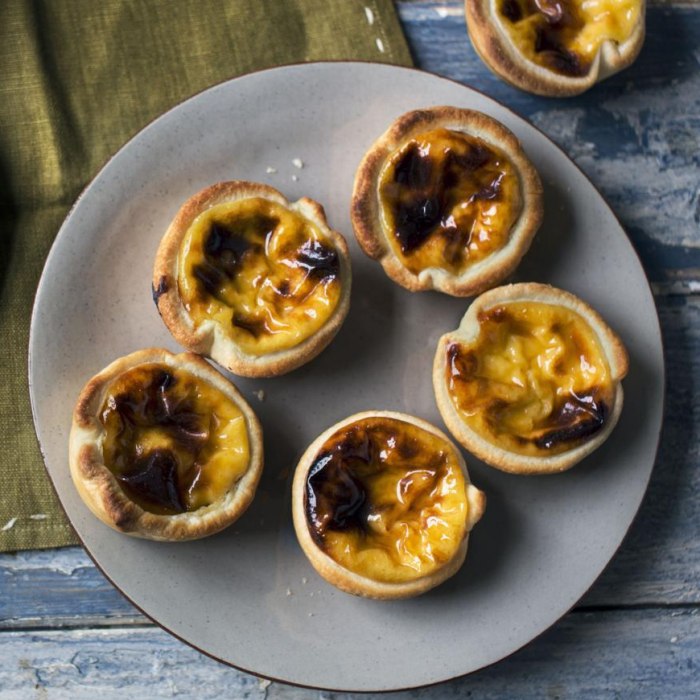
- Preheat oven to 475°F (245°C). Fill the pastry cups with the custard and bake for 15–20 minutes, until the pastry is puffed and the custard is deeply scorched in spots.
- Cool slightly before removing from the tin; serve warm or at room temperature.
The Tale of Portuguese Custard Tarts (Pastéis de Nata)
Story updated

astéis de nata were created sometime before the eighteenth century by Catholic monks at the Jerónimos Monastery in Belém, a district of Lisbon. Convents of the era used large quantities of egg whites to starch habits and linens, leaving a surplus of yolks that nuns and monks put to use in rich pastries and cakes, of which the custard tart is the most famous survivor. Portugal's liberal revolution led to the closure of most religious institutions in the country by 1834, and the monks of Jerónimos, facing the loss of their income, sold their custard tart recipe to a nearby sugar refinery to raise funds. Three years later, in 1837, the refinery's owners opened the Fábrica de Pastéis de Belém, which still bakes the tarts from that original recipe today, kept secret within the bakery's so-called Oficina do Segredo. Only tarts made there may legally carry the Pastéis de Belém name, while the broader, widely imitated style is known simply as pastel de nata across Portugal and the world.
Want Cook Mode, your own recipe photos, and unlimited calculators?
Get Home Cooking ProComments
Loading comments…
Sign in to leave a comment.